By Reece Martin
Listen to this story
Audio narration is available for Peak Premium subscribers. Subscribe to listen
Next Stop is a regular column about how Canada gets around, written by Reece Martin, a transit expert and the creator of a popular YouTube channel where deep dives into high-speed rail, subways, and the finer details of urban transportation rack up tens of millions of views. Today he consults on transportation, and writes for a range of publications, including his blog, The Transit Brief. Now he’s bringing that lens to this column, looking at the trains, buses, airports, and highways that move us, and at the policy, money, and politics behind them.
Getting around some cities is effortless. Want to get to a West End show after a meeting in London’s Canary Wharf business district? Dip below the surface and enter a gleaming station where an enormous snaking train hidden behind a wall of glass appears to whisk you across the city. In Zurich, electric trams and buses seem to wind down every street, appearing every few minutes in rain or snow, and with seats of finely polished wood that would make a luxury car look pedestrian. Visiting Singapore? You can get to the Marina Bay Sands in just minutes on the MRT — that is, if you can get beyond the airport, which famously is a tourist attraction in itself.
Canadians are well-travelled people, and more than 20% were born elsewhere. We see incredible public transit while abroad, in the news, or in Cyberpunk-esque sizzle reels of lesser-known Chinese cities. Great public transit is a statement not only about a place's values — be they environmentalism, efficiency, or egalitarian society — but also about its capabilities. From the tunnels under the European Alps, to the palace-like metro stations of Moscow or Sydney, to China’s over 50,000 kilometres of high-speed rail — greater than the length of all rail in Canada — these grand achievements display wealth, engineering prowess, and ambition.
We can see the gap between here and there — and “there” is increasingly everywhere else in the world — but it’s hard for most of us to say exactly what Canada’s cities need to do better. Transit systems are incredibly complex and esoteric, and clearly vary greatly from place to place. More trains and buses that don’t suck is not a particularly actionable policy directive.
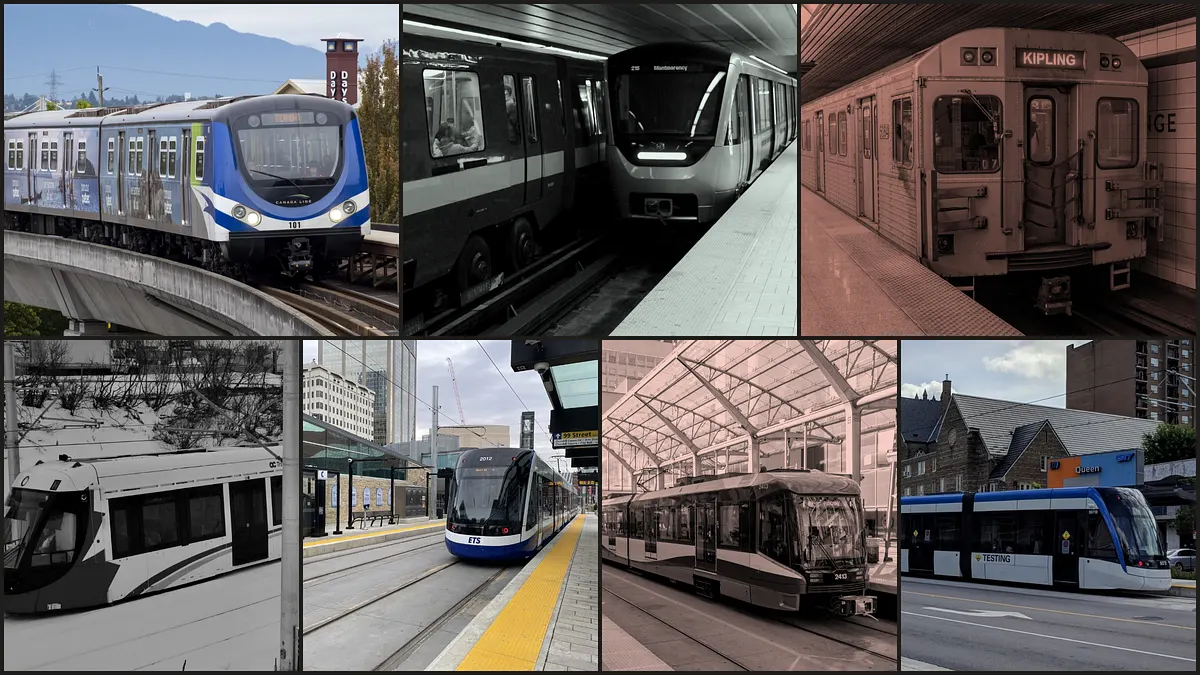
The first thing one needs to understand to get a hold of public transport in Canada is that it is better than we give it credit for. A perennial debate for Canadians is how different we really are from our southern neighbours. On transit, the difference couldn't be starker.
This article is free to read.
Sign up for our newsletter to read this article for free.
Already have a Peak account? Log in